
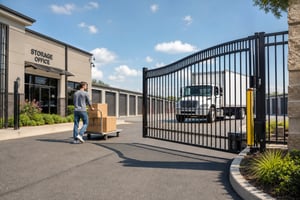
For many self-storage owners and operators, the gate is easy to overlook.
It works. Tenants come and go. Access codes function. Life moves on.
Until one day, it doesn't.
The gate won't open. Tenants can't access their units. The office starts receiving complaints. Service calls get scheduled. Revenue-impacting disruptions begin. Suddenly, the gate becomes the most important piece of equipment on the property.
The problem is that by the time you're dealing with a gate failure, you've already fallen behind.
Many operators view gates as static infrastructure: install it once, maintain it occasionally, and address issues when they arise. But that mindset overlooks what a gate really is. Your gate is one of the most heavily used systems on your property and serves as the first physical barrier between your facility and the outside world. As noted in internal ACT planning materials, treating gates as an afterthought often leads to increased breakdowns, downtime, higher maintenance costs, and operational disruptions.
The Most Overlooked System on the Property
Think about how often your gate operates.
At a typical self-storage facility, it may cycle a hundred times each day. Every tenant visit, vendor delivery, and move-in or move-out depends on that gate functioning properly.
Yet many facilities continue operating gate systems that are 10 years old or older. According to ACT's maintenance planning guidance, aging gate operators often struggle with reliability, compatibility, and serviceability, increasing the risk of unexpected failures.
Unlike roofing, paving, or lighting projects that often make it into annual budgets, gate upgrades frequently get pushed to the bottom of the priority list.
Until something breaks and becomes a costly emergency, leaving your site unsecured.
Reactive Maintenance Is Expensive
When a gate fails unexpectedly, the cost goes far beyond the repair invoice.
Unexpected downtime can create:
- Frustrated tenants
- Increased office workload
- Delayed move-ins
- Security concerns
- Emergency service expenses
- Damage to your facility's reputation
The reality is that emergency repairs are often the most expensive way to maintain any system. According to ACT service and maintenance materials, proactive service programs are designed specifically to help operators avoid costly break/fix emergencies, control operating costs, and extend equipment life.
The question isn't whether your gate will require maintenance.It's whether you'll address it on your schedule or the gate's.
Your Gate Impacts More Than Security
Many facility owners think of gates primarily as security equipment. That's true, but it's only part of the story.
Your gate also impacts:
Tenant Experience
For many customers, the gate is the first interaction they have with your facility. A smooth, reliable entry process reinforces confidence. A malfunctioning gate creates frustration immediately.
Operational Efficiency
Reliable gates reduce management headaches and service calls while keeping facility traffic moving smoothly. ACT's security solutions are designed not only to secure facilities but also to improve operational efficiencies and protect valuable assets.
Property Value
Modern gate systems with updated operators, access control integrations, and remote monitoring capabilities contribute to a more professional, well-maintained facility.
Risk Management
An outdated or unreliable gate can create vulnerabilities that affect security, liability, and overall site performance.
Stop Thinking of Your Gate as a Commodity
One of the biggest misconceptions in the industry is that all gates are essentially the same. They're not.
The right gate solution depends on factors such as:
- Facility layout
- Traffic volume
- Environmental conditions
- Access control requirements
- Long-term maintenance goals
ACT offers a variety of gate styles—including cantilever, swing, vertical lift, pivot lift, and V-track systems—to meet different sites' operational needs.
Choosing the wrong solution can lead to years of unnecessary maintenance, operational challenges, and performance limitations.
A Smarter Approach: Treat Your Gate Like an Asset
The highest-performing operators don't wait for failure.
They think strategically about gate performance the same way they think about occupancy, revenue management, or security.
That means:
- Conducting routine inspections
- Monitoring wear and tear
- Budgeting for upgrades before failures occur
- Reviewing operator age and performance
- Implementing preventative maintenance schedules
- Partnering with experienced gate professionals
As ACT's maintenance guidance points out, security infrastructure requires more than reactive fixes. It requires structured, proactive care that supports long-term operational success.
The Bottom Line
Gates don't fail overnight.
They wear down over time. Small issues become larger problems. Deferred maintenance becomes emergency service calls. Aging equipment causes unexpected downtime.
The operators who consistently deliver better tenant experiences and avoid costly surprises understand a simple truth:
Your gate isn't just an entrance.
It's one of the hardest-working systems on your property.
And if you only think about it when it breaks, you're already behind.